
Michael S. Law
Speaker – Fox Radio Network Contributor – Author of "The Founders' Revolution"
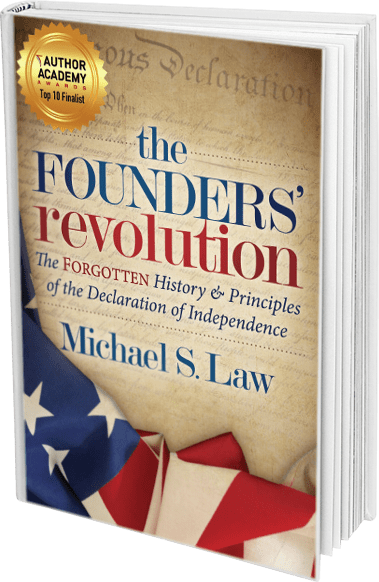
The Founders’ Revolution – Available Now!
“The Founders’ Revolution” enlightens readers about the forgotten history of how the Declaration of Independence came into being and urges readers to return to the principles and the truths found in the Declaration of Independence, showing how the Declaration is still applicable today.
BUY NOW
Reviews
Michael Law’s The Founders’ Revolution is a revealing and much-needed retelling of the writing of the Declaration of Independence and the events that led up to it. But this is more than a book of history. Law brings out connections between the reasons for the Founders’ revolt and what’s going on in America today. He shows how our federal government is committing similar wrongs against us today as England’s king and Parliament did to Americans centuries ago. The Founders’ Revolution is a rallying cry for Americans to pay closer attention to their own government’s actions and to hold officials accountable for their decisions against us, the electorate. Pay heed to what Law has to say. We are losing our liberties―and we do not have to!

Michael S. Law has written a carefully considered history of the writing of the Declaration of Independence with analysis of today’s conditions in comparison with the conditions of the time. This is not an overtly political book, though it is unapologetically conservative in its views. These views are based solely on the writings of the founders and on historical documents, not on modern-day concepts of “living documents” commonly applied to the Constitution by those of a more liberal mindset.
One of the things I most appreciated about Law’s writing is his application of analysis based on the context of the time in which the Declaration was written instead of current revisionist thinking that applies 21st-century values, or lack thereof, to the document. I particularly appreciated his handling of the slavery issue in which Law exposed the fallacy of the present-day condemnation of the founders who were locked into a system they abhorred but were unable to change due to laws not of their making that prevented them from releasing the slaves they inherited. Very few today are aware of the anti-manumission laws they opposed. Very few today are aware that Washington, Jefferson, Adams, and others petitioned King George to end importation of slaves to the colonies; rather King George was the one who forced their continued importation.
I have a significant library of historical volumes, and I’m most gratified to add this one to my shelves. I know Law’s book is one I will refer to over and over again in the future as I research material for projects at hand.

The Founders’ Revolution
by Michael S. Law
$12.95 + FREE Shipping!